Showing posts with label Argentina. Show all posts

Wednesday, April 19, 2017

Argentine Precious Stone

click images to enlarge
Rhodochrosite

Rhodochrosite is a manganese carbonate mineral with chemical composition MnCO3. In its (rare) pure form, it is typically a rose-red color, but impure specimens can be shades of pink to pale brown. Rhodochrosite is Argentina's "national gemstone".

Famed for its banding, ranging from light pink to bright red, Argentinian Rhodochrosite is a truly unique gemstone. In ideal specimens of this stone, the banding crosses the surface of the stone in a zigzag pattern, with a sharp contrast between colors.

Inca Rose
Throughout our trip in South America we saw several merchants selling the local semi-precious gem.  These images were taken at Buenos Aires International Airport while waiting for our return flight.

As you can see the gem can be carved into many shapes, including my favorite (you guessed it) - Penguin.

As with any gem, expect to pay a premium based on the quality of the stone used for the setting.   A decent grade stone used in an earring will cost around $125 US at most jewelers.  If you are looking for something special for yourself or a gift, you'll want to check these gems out during your visit.


Click on the image to the right for more Blog posts about this trip.

Related Album:

Inca Rose Gems


Additional photos can be found on our South America Shutterfly page

View Our Other Shutterfly Share Pages


Sign-up for Exclusive Email Offers


Where have you explored? 

Gather your travel and food pics and join us Wednesday night for the latest installment of #FoodTravelChat 

Sunday, March 5, 2017

La Recoleta Cemetery

click images to enlarge
Buenos Aires
Debark Tour

Until 1822, Buenos Aires residents who passed away were buried on church grounds. After a while, this practice became problematic for reasons of space and hygiene. Eventually, in November of that year, Governor Martin Rodriguez banned the traditional practice, and instituted the city’s first official cemetery on the grounds of a monastery. The cemetery fell into disrepair and was completely renovated in 1881. The name was changed to its present one, Cementerio de la Recoleta (Recoleta Cemetery) in 1949.

When Argentina’s wealthy and powerful rest for eternity, they do it in style. La Recoleta cemetery is one of the world’s most extraordinary graveyards, with over 6,400 grandiose mausoleums resembling Gothic chapels, Greek temples, fairytale grottoes and elegant little houses. The exclusive cemetery is the last stop for the country’s most celebrated (and controversial) presidents, intellectuals, army generals and entertainers, and a
popular attraction for visitors to Buenos Aires. This cemetery is perhaps BA's top attraction.

Eva Perón (1919 – 1952) 

No one goes to Recoleta cemetery without a visit to Evita’s grave. By Recoleta standards, however, it is quite nondescript. Three years after former First Lady Perón died of cancer in 1952, her body was removed by the Argentine military in the wake of a coup that deposed her husband, President Juan Perón. The body then went on a transatlantic odyssey for nearly twenty years before finally being returned to the Duarte family mausoleum in Recoleta Cemetery. She now lies in a crypt five meters underground, heavily fortified to ensure that no one can disturb the remains of Argentina’s most beloved and controversial First Lady.


Click on the image to the right for more Blog posts about this trip.

Related Album:

La Recoleta Cemetery
Metropolitan Cathedral
Debark Tour


Additional photos can be found on our South America Shutterfly page

View Our Other Shutterfly Share Pages


Sign-up for Exclusive Email Offers


Where have you explored? 

Gather your travel and food pics and join us Wednesday night for the latest installment of #FoodTravelChat 

Buenos Aires Metropolitan Cathedral

Plaza de Mayo
click image to enlarge


The Plaza de Mayo (English: May Square) is the main square in the Monserrat barrio of central Buenos Aires, Argentina. It is flanked by Hipólito Yrigoyen, Balcarce, Rivadavia and Bolívar streets. This area of Buenos Aires is congested most of the time.  The tour description indicated that we might not be able to stop there.  Fortunately, we were able to stop and spend about 30 minutes there.  Our motor coach dropped us off and then returned to pick us up.  

Metropolitan Cathedral

The Buenos Aires Metropolitan Cathedral is the main Catholic church in Buenos Aires, Argentina. It is located in the city center, overlooking Plaza de Mayo, on the corner of San Martín and Rivadavia streets, in the San Nicolás neighbourhood. It is the mother church of the Archdiocese of Buenos Aires and the primatial church of Argentina. Pope Francis had presided over this church as Cardinal.

In 1880, the remains of General José de San Martín were brought from France and placed in a mausoleum, reachable from the right aisle of the church.

Click on the image to the right for more Blog posts about this trip.

Related Album:

Metropolitan Cathedral
Debark Tour


Additional photos can be found on our South America Shutterfly page

View Our Other Shutterfly Share Pages


Sign-up for Exclusive Email Offers


Where have you explored? 

Gather your travel and food pics and join us Wednesday night for the latest installment of #FoodTravelChat 

Saturday, March 4, 2017

Explore City of Buenos Aires

9 de Julio Avenue

click images to enlarge
July 9 Avenue, located in the city of Buenos Aires, Argentina, is the widest avenue in the world. Its name honors Argentina's Independence Day, July 9, 1816. The avenue runs roughly 1 kilometer (0.62 mi) to the west of the Río de la Plata waterfront, from the Retiro district in the north to Constitución station in the south.

The avenue has up to seven lanes in each direction and is flanked on either side by parallel streets of two lanes each. Through the center of the avenue runs one of the city's Metrobus (Buenos Aires) (Bus rapid transit) corridors, which stretches 3 kilometers (1.9 mi) and was inaugurated in July 2013.  There are two wide medians between the side streets and the main road.

Street Art 
Statues & Monuments

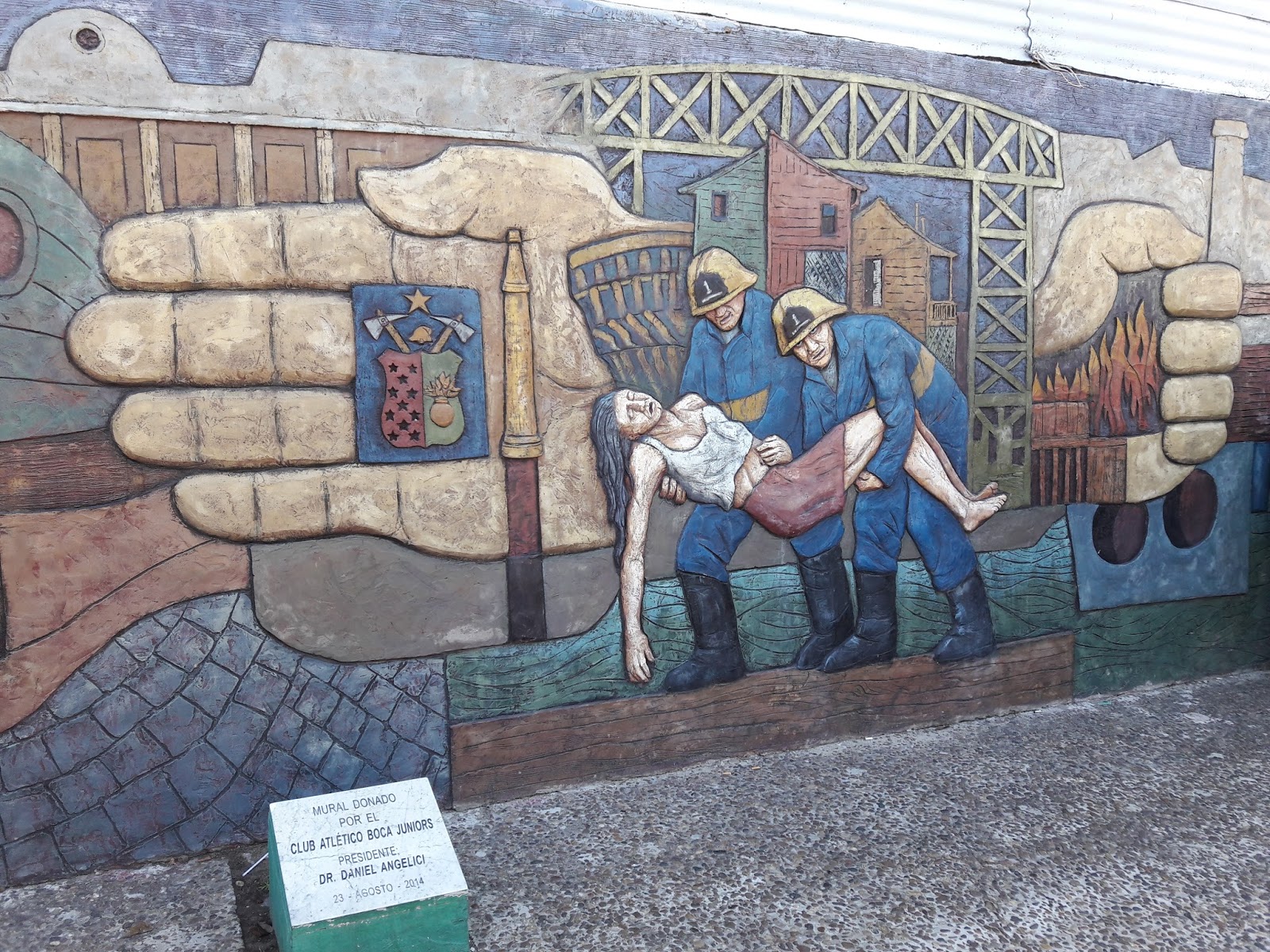
Driving through the neighborhoods of Buenos Aires we saw several examples of street art. Unlike other countries, Argentina celebrates the work of local and foreign artists who flock here to show their talents.

The massive metropolis offers artists plenty of space for painting outdoors. Here it isn’t hard to find empty walls on high rises, garage doors or abandoned factories. Buenos Aires has few regulations around graffiti art.

Most of the time, all the artist needs is permission from the building owner. In many cases, artists are sought out by building owners who’d like to add something interesting to their bare walls.

Sightseeing enthusiasts rarely leave Buenos Aires without taking lots of photos, such is the volume of interesting buildings, monuments and landmarks in the city.

Buenos Aires City Guide


From sculptures to squares, the city of Buenos Aires is bursting with eye-catching edifices and artworks. We were no exception - see our albums for a selection.

The Obelisco de Buenos Aires (Obelisk of Buenos Aires) is a national historic monument and icon of Buenos Aires.

An obelisk is a tall, four-sided monument which ends in a pyramid-like shape at its top. Located in the Plaza de la República in the intersection of avenues Corrientes and 9 de Julio, it was erected in 1936 to commemorate the fourth centenary of the first foundation of the city.

Click on the image to the right for more Blog posts about this trip.

Related Album:

San Isidtro
Tigre River
Buenos Aires Port
Debark Tour


Additional photos can be found on our South America Shutterfly page

View Our Other Shutterfly Share Pages


Sign-up for Exclusive Email Offers


Where have you explored? 

Gather your travel and food pics and join us Wednesday night for the latest installment of #FoodTravelChat